Following the publication of the Guidelines on the new opposition procedure for French patents in 2021, Regimbeau published a series of articles available here.
The opposition procedure was introduced in France by the PACTE Act. An opposition procedure had, at that time, already been available before several foreign intellectual property offices. In particular, an opposition procedure has long existed before the European Patent Office (EPO), allowing third parties to oppose the grant of a European patent in a centralised fashion, within much shorter timeframes and at a significantly lower cost than would be required to challenge the validity of the patent before each of the national courts where one wishes to have the patent revoked - or even before the Unified Patent Court.
It is therefore only natural that the French opposition procedure is modelled on EPO opposition proceedings: a nine-month time limit from the date of publication of grant to file an opposition; a written phase comprising a series of exchanges between each of the parties – the patent proprietor and the opponent – and the INPI’s Opposition Board (commission d’opposition), followed, in most cases, by an oral hearing before the Board, which then decides whether to revoke or uphold the patent.
The French opposition procedure does, however, have certain specific features that distinguish it from opposition proceedings before the EPO, notably:
Statistics
Since the opposition procedure came into force in France, and as of 2 October 2026, oppositions have been filed against 163 patents.
| Year | Number of oppositions filed |
| 2020 | 2 |
| 2021 | 19 |
| 2022 | 36 |
| 2023 | 36 |
| 2024 | 32 |
| 2025 | 22 |
| 2026 | 13 (as of 2 October 2026) |
After a slow start, this procedure therefore appears to have found its audience, although the number of oppositions filed has fallen slightly over the last two years.
In order to identify trends in opposition proceedings over recent years, we carried out a study of sixty opposition proceedings for which the file history is available on the INPI’s public database, covering oppositions filed between 2023 and 2026, as follows:
| Year in which the opposition was filed | Number of proceedings analysed |
| 2023 | 3 |
| 2024 | 29 |
| 2025 | 17 |
| 2026 | 11 |
It should be noted that no decision has been published in some of these proceedings, as the proceedings may be terminated by agreement between the parties, or may be suspended in certain cases provided for in Article R. 613-44-10 of the French code of intellectual property (CPI).
Grounds for opposition
Among the grounds of opposition listed in Article L. 613-23-1 of the CPI, inventive step is the ground that is most frequently invoked, having been raised in all sixty proceedings we examined, closely followed by novelty, which was invoked in 52 out of 60 cases. This is hardly surprising, given that it is often more difficult to identify prior art that discloses the invention in its entirety (lack of novelty) than to put forward arguments tending to prove that the invention would have been obvious to a person skilled in the art from the state of the art taken as a whole (lack of inventive step).
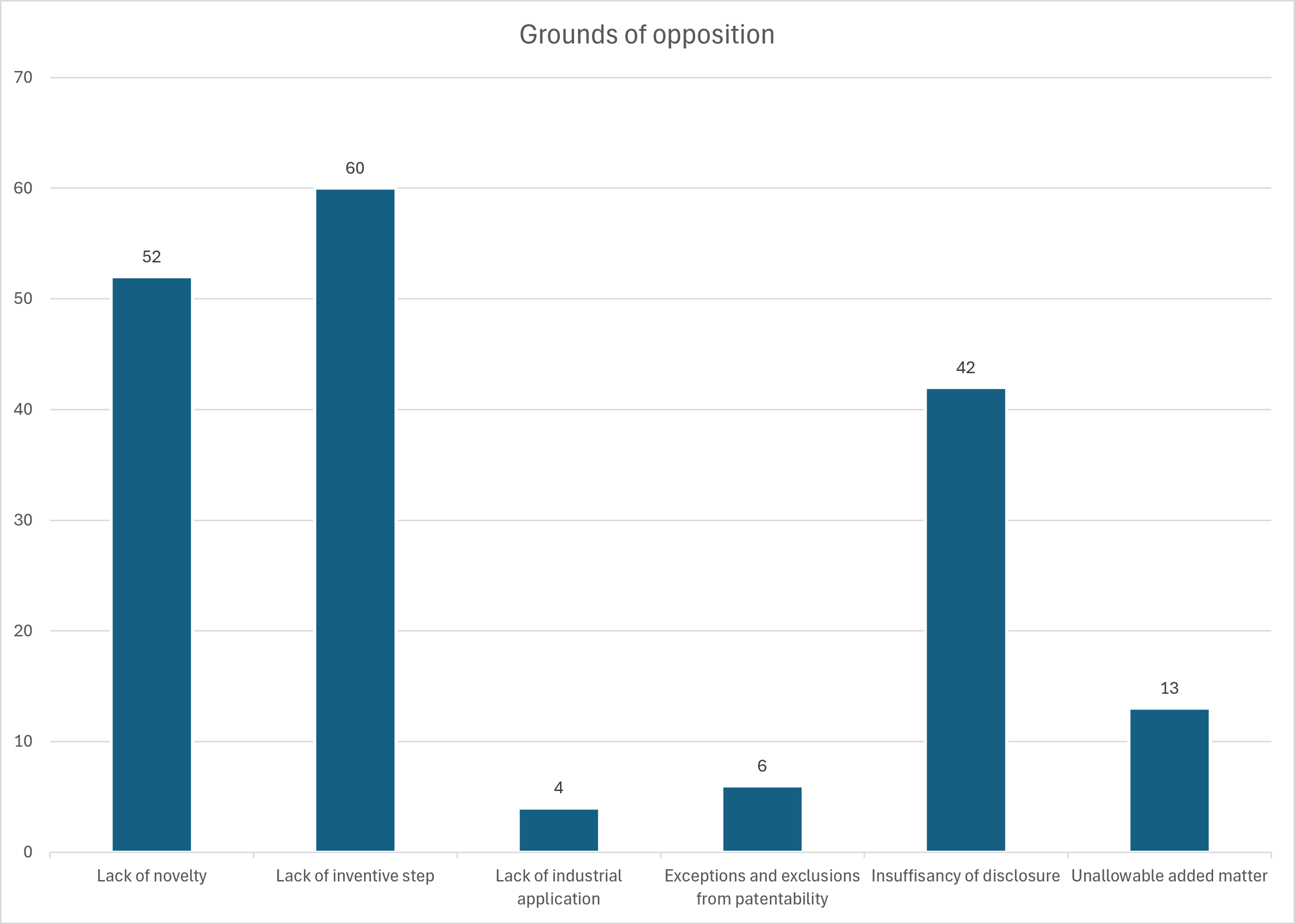
Insufficient description is also cited in a significant number of decisions. This ground generally requires highly technical argumentation and is less frequently upheld by the Opposition Divisions of the European Patent Office (EPO) than grounds requiring an examination of the prior art, such as novelty and inventive step. As will be seen below, the same phenomenon is observed before the INPI’s Opposition Boards.
The extension of the subject matter beyond the contents of the application as filed is invoked in only 13 proceedings. This ground cannot be credibly invoked in many cases, for example where no amendments to the claims have been made since filing, or where the amendments are merely combinations of claims present in the patent application at the date of filing.
The ground of lack of industrial application was invoked in only four proceedings, which is hardly surprising, since this criterion is met provided that the subject-matter of the invention can be manufactured or used in any kind of industry, including agriculture.
Finally, two other grounds are very rarely invoked:
Identity and nature of the opponents
Unlike patent litigation before French courts, in which the claimant must demonstrate a legal interest in bringing the action, the opposition procedure allows any third party to file an opposition against the patent. It is therefore possible to use a so-called ‘strawman’ who files the opposition in their own name rather than on behalf of the natural or legal person who actually has an interest in challenging the validity of the patent. This is often an IP private practice acting as an agent on behalf of the opponent, even though there is no legal obligation in this regard.
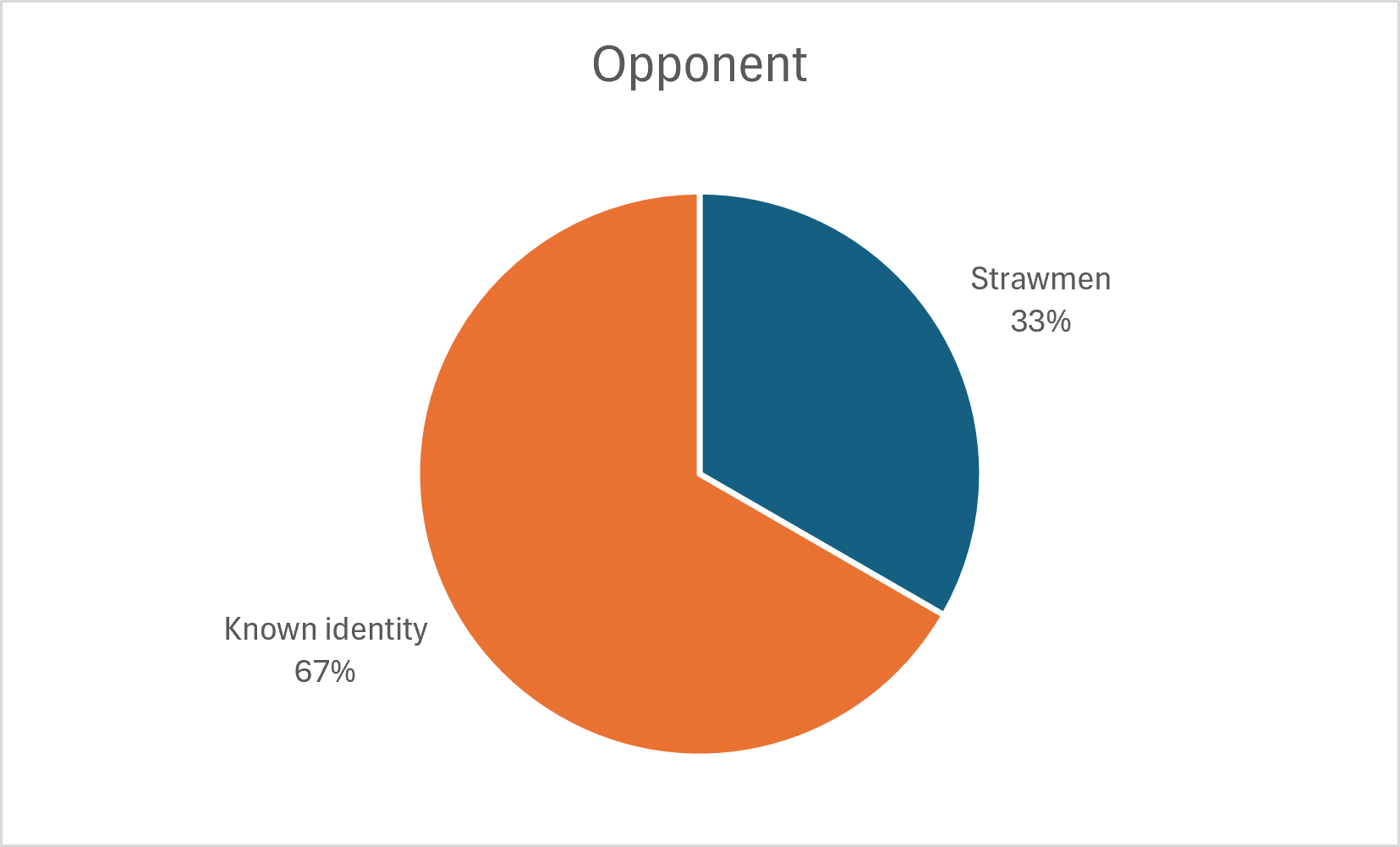
This option is widely used, since, of the sixty opposition proceedings examined, one-third were filed using a strawman, whilst two-thirds were brought on behalf of a well-identified natural or legal person.
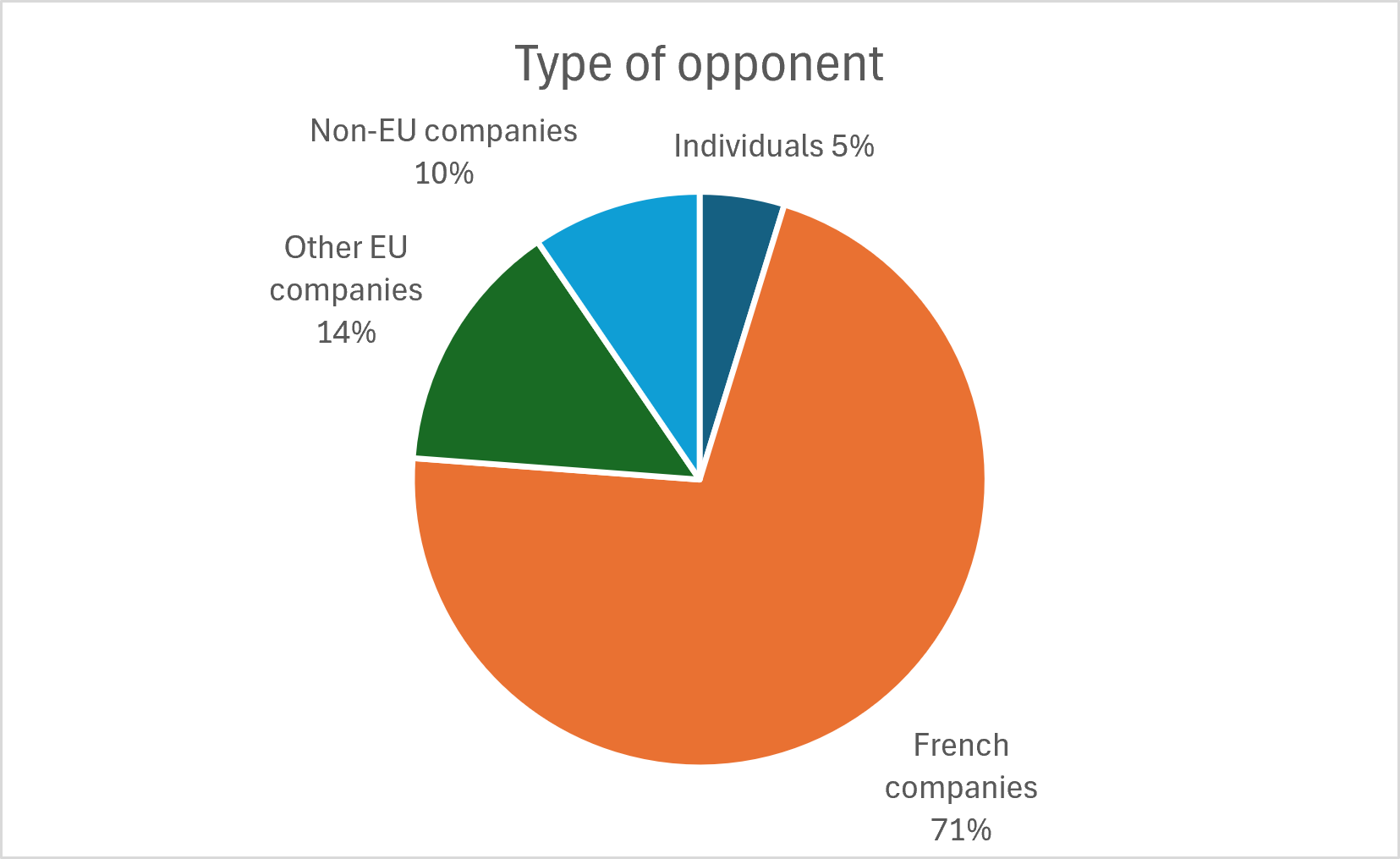
Furthermore, of the forty proceedings for which the identity of the opponent is known, 75 per cent involve at least one opponent which is a French company (30 out of 40). Among the identified opponents, there are also three German companies, two US companies, one Spanish company, one Swedish company, one Czech company, one Swiss company and one British company.
Among the French companies, there is an even distribution of proceedings across large companies (14 opponents), mid-sized companies (3 opponents) and SMEs (13 opponents). i. The INPI had put forward the accessibility of the opposition procedure to SMEs and mid-size companies as a key objective when the PACTE Act came into force. The French opposition procedure can therefore be considered a success from this perspective.
Finally, only two individuals were involved as opponents.
Technical field
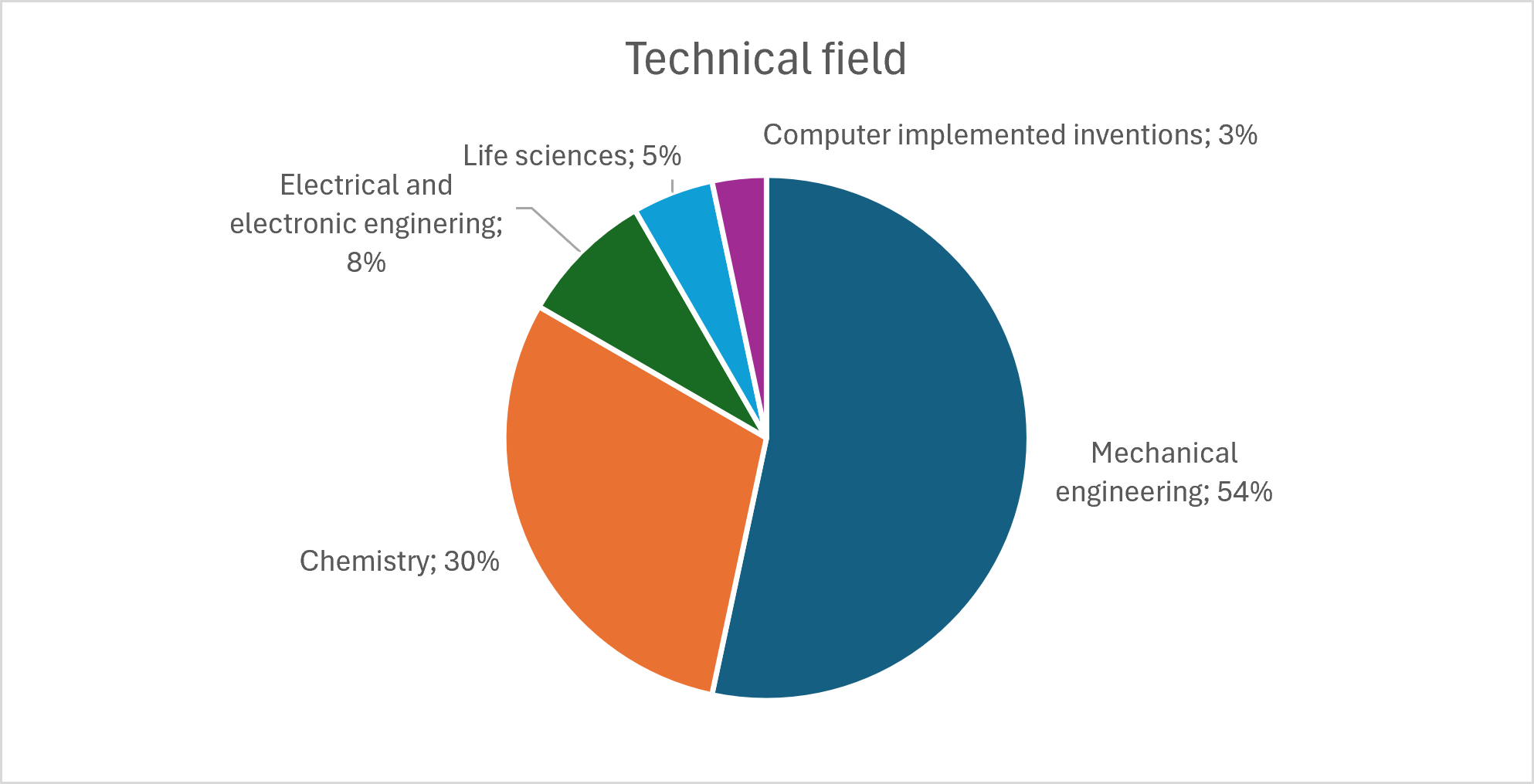
Of the decisions we examined, the majority relate to the field of mechanical engineering (32 out of 60), with a significant number of proceedings falling within the field of chemistry (18 out of 60). Electrical and electronic engineering, life sciences and computer-implemented inventions account for just five, three and two proceedings respectively.
Decisions of the Opposition Boards
Of the sixty proceedings examined, 21 have already been the subject of a decision by an INPI Opposition Board. 22 proceedings are still pending. Furthermore, 17 cases have been closed, either due to a request by the patent proprietor to revoke the patent (9 cases), the withdrawal of the opposition by the opponent (5 cases), or a finding that the patent had lapsed (3 cases).
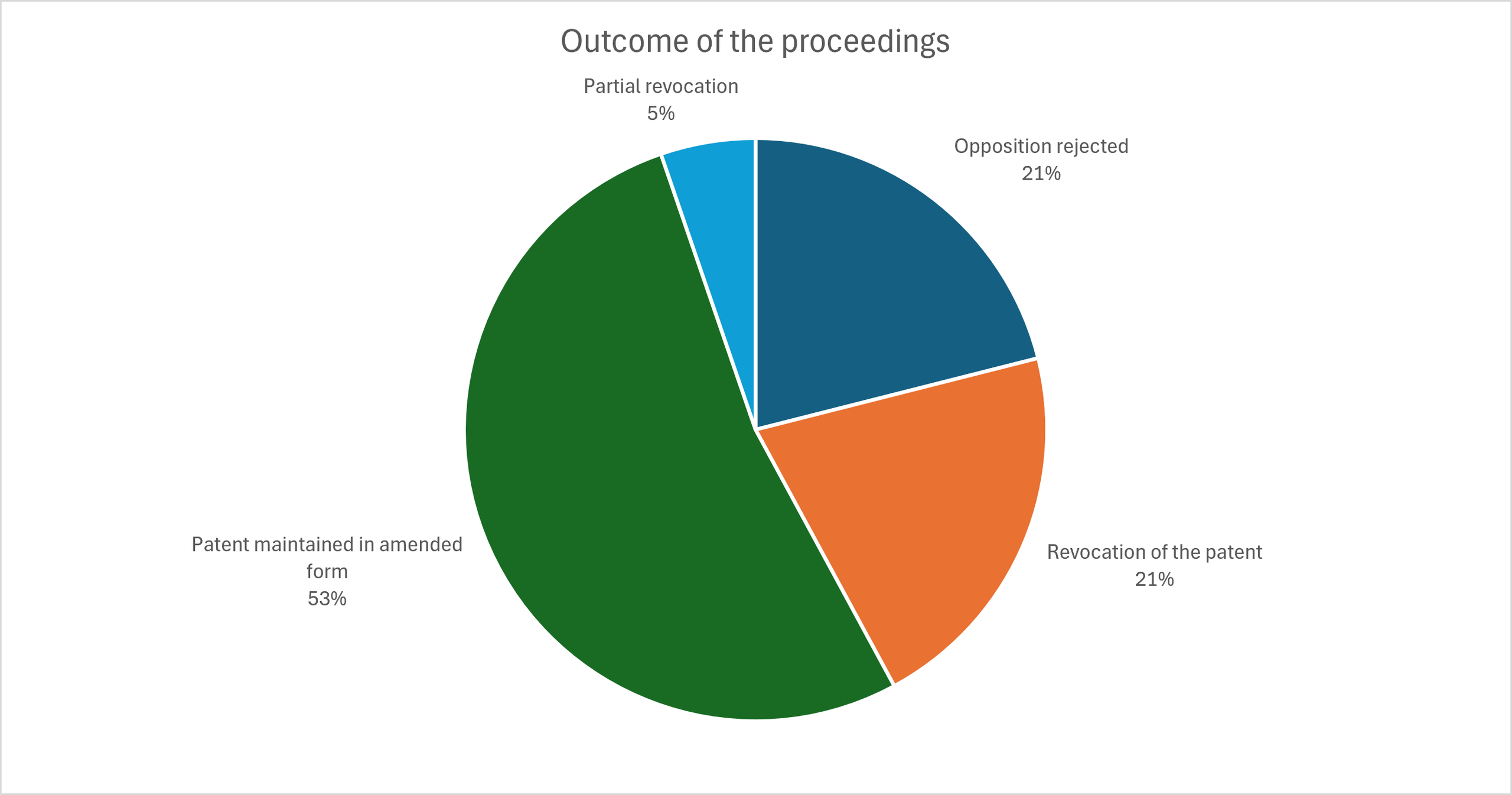
Outcome of the proceedings
The scope of the patent was narrowed in one way or another in the vast majority of cases; the patent was upheld as granted in only 4 of the 21 decisions handed down in the cases examined. The opposition procedure therefore allows for a genuine challenge to titles granted following examination by the INPI, in line with the stated objective of the PACTE Act to strengthen French industrial property rights.
What lessons can be drawn from this?
The case law of the INPI’s Opposition Boards is growing as decisions are handed down, and the decisions examined here provide valuable insights into the arguments put forward by the parties that the Boards have deemed convincing or unconvincing in recent years.
With regard to the grounds invoked, the success rate for each ground – defined as the number of cases in which that ground was upheld by the Board divided by the number of cases in which it was invoked by the opponent – is as follows:
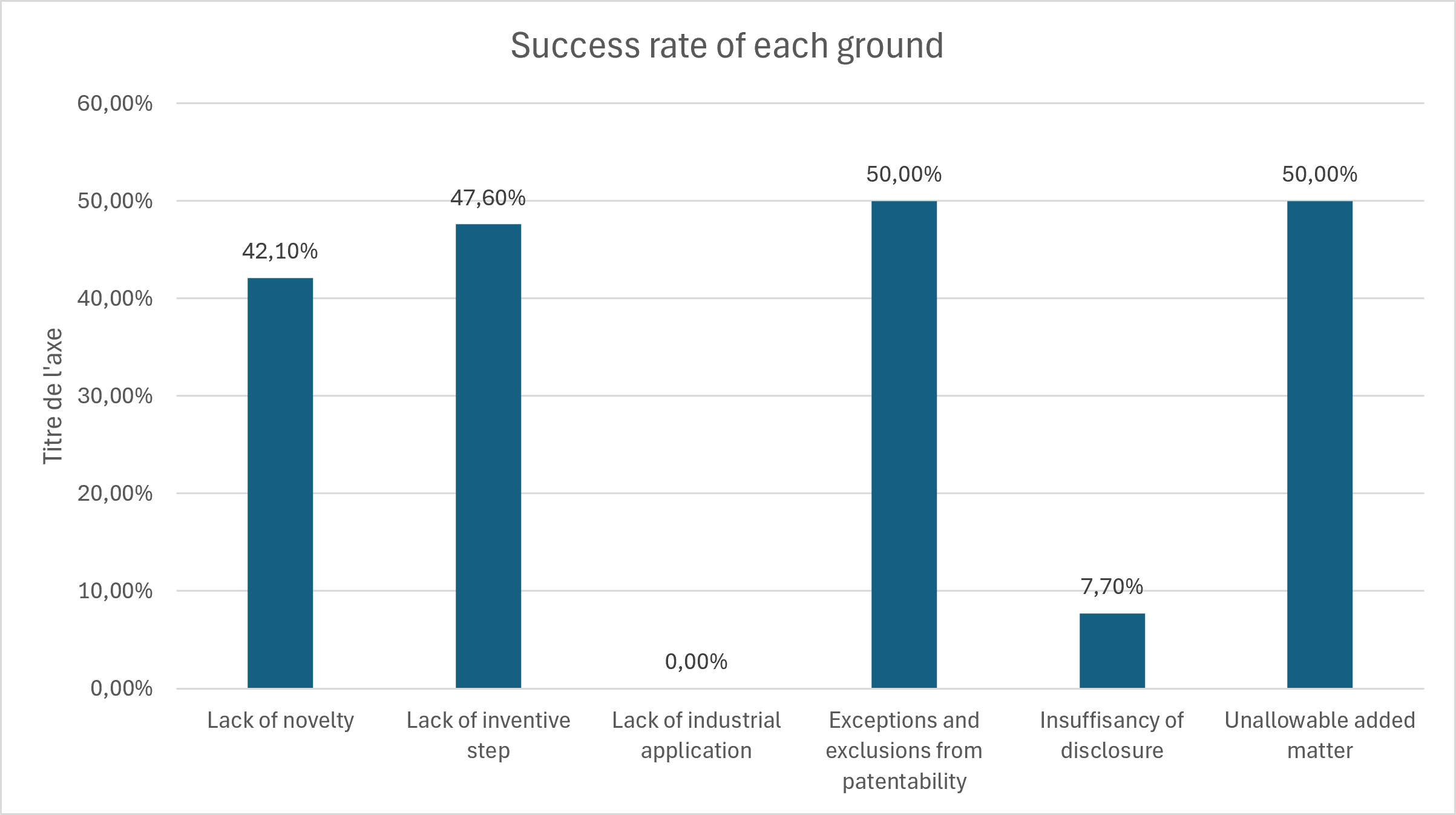
It is worth noting that insufficiency of disclosure, although raised in 13 cases, was upheld only once by the INPI. Indeed, the Boards apply a strict standard when assessing this ground, and often state that a mere ambiguity in the description or a lack of clarity in the wording is not sufficient to constitute an insufficiency of disclosure, provided that at least one embodiment is clearly set out so as to enable a person skilled in the art to carry out the invention – a criterion reiterated by the Paris Court of Appeal in its judgment in BMW v. Michelin of 29 May 2024, concerning an appeal against an opposition decision by the Director General of the INPI in patent matters.
Conversely, in case OPP24-0003, the decision of 28 May 2025 upheld the ground of insufficient disclosure because claim 1 covered three distinct alternatives due to the use of ‘and/or’ wording, whilst the description did not disclose any embodiment for one of these alternatives.
With regard to inventive step, the Boards apply, quite systematically, the problem-solution approach developed by the EPO’s Boards of Appeal, which involves selecting the prior art closest to the invention, defining the objective technical problem that the invention solves in relation to that document, and assessing whether a person skilled in the art, seeking to solve that problem, would have arrived at the claimed invention in an obvious manner on the basis of the entire prior art and their general knowledge. This practice is to be welcomed, insofar as the problem-solution approach effectively limits the subjectivity inherent in the assessment of inventive step and is widely understood by IP professionals both in France and across Europe.
On other matters, the INPI’s practice sometimes diverges from that of the EPO, particularly due to the specific features of French legislation.
For example, the EPO systematically allows the opponent to challenge the validity of a subsidiary request submitted by the proprietor during the proceedings, even if the independent claim of that request corresponds to a claim as granted which was not challenged in the notice of opposition, pursuant to Decision G9/91 of the Enlarged Board of Appeal.
By contrast, the French Boards have held, for example in case OPP 23-0027, that an opponent who has not challenged a dependent claim within the nine-month opposition period is precluded from bringing such a challenge pursuant to Articles R. 613-44 and R. 613-44-1 of the CPI, even when doing so in order to challenge a subsidiary claim whose independent claim has been limited with all features of that dependent claim.
A similar line of reasoning was adopted by the Opposition Board in decision OPP 24-0012. In that case, the opponent had sought the revocation of the patent in its entirety but had not invoked the grounds of lack of novelty and inventive step in relation to claims 6 and 7 to 14. The Board therefore stated that the opponent could not challenge the novelty and inventive step of the independent claim of auxiliary request 9, which includes the additional features of claim 6, as this would amount to extending the scope of the opposition, in breach of Article R. 613-44-1 of the CPI.
It is therefore essential for opponents to raise objections on each ground they are able to put forward within the nine-month opposition period, in respect of all claims of the patent, in order to avoid preclusion.
The French Patent Attorneys at Regimbeau are available to assist you with your opposition proceedings before the INPI.
Télécharger la publication